
Dracocephalum moldavica
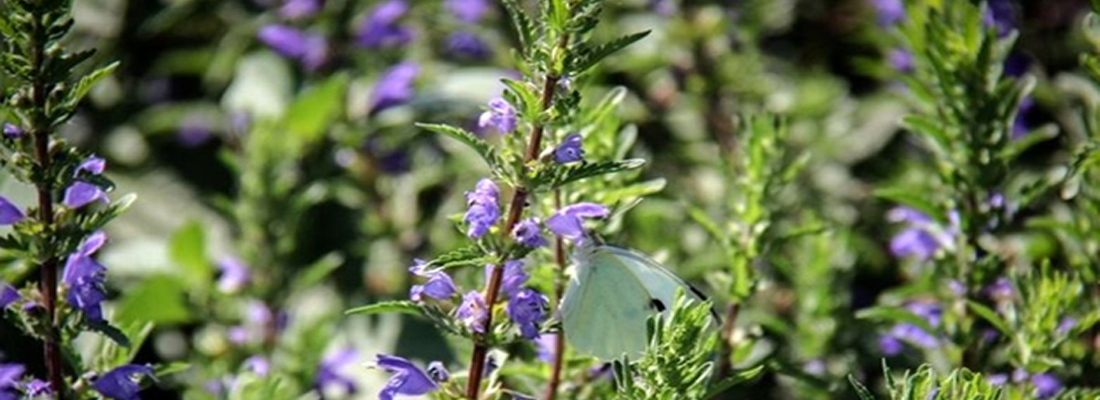
Dracocephalum is a genus of flowering plants in the Lamiaceae family, originating from temperate regions of the Northern hemisphere. It comprises approximately 60 to 70 species. Although numerous species are distributed throughout Asia, a small number can also be found in central and northern Europe. Furthermore, there is a single species of Dracocephalum that is indigenous to North America. The northeast, north, northwest, and southwest regions of China are home to approximately 32 species and 7 varieties.
Typically, 30–100 cm tall, Dracocephalum moldavica is a bushy, aromatic annual plant with slender, branched stems, opposite lanceolate leaves with crenate edges, and blue-purple or white, bilaterally symmetrical flowers arranged in whorls. The blossoms are characterized by a fused, tubular corolla and four stamens. The corolla is typically 24 mm in length, and the upper lip has two lobes. The lower lip frequently contains dark purple patches that function as pollinator-guides. The flower has four stamens, two of which are longer and two of which are shorter, and a four-lobed, disc-shaped nectary at the base of the ovary that produces nectar. and its fruit is a desiccated, ovoid capsule [1].
Dracocephalum moldavica is a plant that is employed in traditional medicine to treat a variety of conditions. It is commonly used to detoxify the liver, alleviate gastric heat, and treat cardiovascular diseases. Additionally, it is used for its sedative and tranquilizing properties, which are notably beneficial in the treatment of nervous disorders and the enhancement of brain function. It is employed in the treatment of angina pectoris, blood pressure, and cardiac disease in Uighur folk medicine [2].
Approximately 154 compounds have been identified and isolated. Flavonoids, essential oil, phenols, phenylpropanoid, lignans, and terpenoids are among the numerous components that have been identified in Dracocephalum moldavica.
The exact percentages of geranyl acetate, geranial, neral, and geraniol in the essential oil of Dracocephalum moldavica are contingent upon the growing location, time of harvest, and extraction method. 1,8-cineole, 4-terpineol, limonene, α-pinene, and nerol are additional valuable compounds [3-5].
**Disclaimer: This content is for informational purposes only and is not intended to provide medical advice, diagnosis, or treatment. Please consult a qualified healthcare professional for personalized guidance.
Dracocephalum moldavica essential oils chemical composition (%) from different regions.
|
|
Mediterranean |
East Asia |
Middle East |
|
|
Geraniol |
Up to 5 |
Up to 30 |
Up to 30 |
|
|
Geranial |
5-10 |
1-5 |
30-50 |
|
|
Neral |
Up to 15 |
1-3 |
2-10 |
|
|
Geranyl acetate |
Up to 20 |
10-20 |
3-15 |
|
|
Germacrene D |
trace |
0.2-0.5 |
0.2-5 |
|
|
Neryl acetate |
1-3 |
n/d |
0.2-0.5 |
|
|
α-Citral |
n/d |
Up to 20 |
Up to 10 |
|
|
β-Citral |
n/d |
Up to 20 |
Up to 10 |
|
n/d. not determined
References
1- S. F. Borghei, A. Azizi, S. H. Pourhosseini and M. Rahimi-Rizi, Journal of Applied Research on Medicinal and Aromatic Plants 2024, 38, 100522.
2- H. Liu, X. Feng, Y. Zhao, G. Lv, C. Zhang, Aruhan, T.-A. Damba, N. Zhang, D. Hao and M. Li, Frontiers in Pharmacology 2024, 15, 1449426.
3- M. Dmitruk, A. Sulborska, B. Żuraw, E. Stawiarz and E. Weryszko-Chmielewska, Brazilian Journal of Botany 2019, 42, 701.
4- T. Shuge, Z. Xiaoying, Z. Fan, A. Dongqing and Y. Tao, Pharmacognosy Research 2009, 1.
5- M. Maham, H. Akbari and A. Delazar, Pharmaceutical sciences 2013, 18, 187.
